There are dozens of CPOs across the country, why should drivers filter for Source EV when they open Zapmap?
Because we’re designed around one simple shared objective: you’ll be able to charge when you arrive.
At Source, we build large, Ultra-rapid hubs, typically 10 bays or more, so drivers aren’t left queuing or searching for alternatives. Combined with Rapid chargers (150kW+ as standard) and smart monitoring technology, we focus on delivering real-world availability, not just coverage on a map.
Add in simple payment options, renewable energy as standard, and a strong focus on safety and accessibility, and filtering for Source means choosing confidence, not compromise.
Additionally, as a joint venture between TotalEnergies, one of Europe’s largest CPOs, and SSE, a leading renewable energy provider with a strong social responsibility track record, we’re held to the highest standards. Everything we deliver reflects not just our name, but the reputation and expertise of both parent companies.
What's been the biggest surprise for Source EV so far this year, and how have you responded to that?
One of the biggest surprises has been how quickly driver expectations are evolving. Reliability and speed are now assumed. What drivers really value is certainty and ease.
We’ve responded by doubling down on the things that remove friction: improving hub design for better flow, enhancing real-time monitoring, and refining how drivers find and use our sites. It’s also influenced how we communicate, focusing less on technical specs, and more on what drivers actually experience when they plug in.

Source EV charging at Ocean Terminal, Edinburgh
What is your most unique location in your network and why?
It’s hard to look past our Dundee hubs at Myrekirk Roundabout and nearby Broomhill Road.
Whilst Myrekirk is one of the largest ultra-rapid hubs in Scotland at 24 bays, all with a living roof canopy and newly deployed 300kW chargers, but Broomhill Road features a repurposed wind turbine blade as an all-weather canopy, a visible statement of circular design and sustainability.
Combined with Ultra-rapid charging and strong local landmarks like the V&A Dundee and RRS Discovery nearby, it perfectly captures what we’re aiming to deliver: infrastructure that’s practical, sustainable, and rooted in its local community.
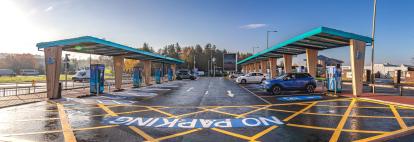
Source EV charging at Myrekirk Roundabout, Dundee
As driver expectations keep rising, what are you investing in first: more charge points, or the operational capability behind them to keep the experience consistently reliable?
It’s a difficult choice. In reality you can’t afford to prioritise one over the other for long.
Expanding the network is critical. If drivers can’t find a charge point where and when they need one, the transition to EVs stalls before it even begins. Visibility, accessibility, and convenience are what bring new drivers in and support those already on the journey.
But scaling infrastructure without matching it with operational excellence quickly erodes trust. A charger that’s unavailable or unreliable has a disproportionate impact on driver confidence, no matter how strong the overall network footprint looks on paper.
So, while there’s a natural tension between investing in growth versus reliability, the real challenge is balancing both at pace. As we scale, meeting rising driver expectations means not just expanding the network, but ensuring every interaction with it is dependable. That requires ongoing dialogue with drivers, testing solutions in real-world conditions, and continuously evolving both our infrastructure and the systems that support it.
What is the biggest barrier to EV uptake in the UK and how can this be addressed?
It might come as a surprise but the biggest barrier is actually confidence, not technology.
Many drivers still worry about whether chargers will be available, working, and easy to use when they need them. Addressing that comes down to consistency: reliable infrastructure, clear information, and a seamless experience. We treat the look (visibility) and layout of our hubs as a marketing channel because we understand that we also need to show and demonstrate all of this to the next generation of EV drivers, as well as those looking for a charge today.
As an industry, we need to move beyond simply adding more chargers, and focus on building networks that people trust. Larger hubs, better uptime, transparent pricing, and clear wayfinding all play a role in making EV ownership feel effortless.
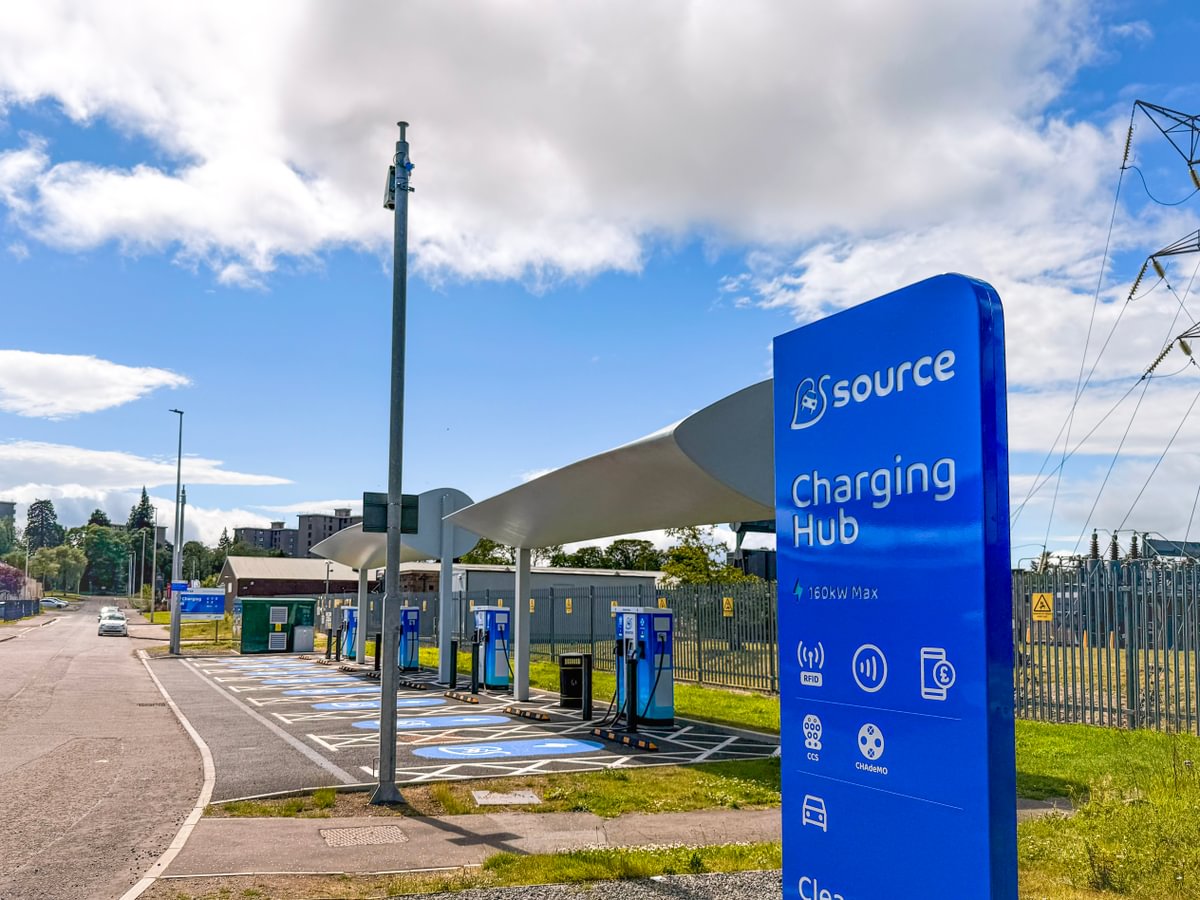
Source EV charging at Broomhill Road, Dundee
How are you making the charging experience simple for drivers across the UK?
We focus on removing friction at every step.
That starts with finding us easily, through platforms like Zapmap and strong mapping visibility. From there, when drivers arrive, our hubs are designed for straightforward access, clear signage, and safe, well-lit environments.
Charging itself is simple: contactless payment, roaming integrations, and app-based options all work seamlessly. Behind the scenes, our technology monitors performance in real time, so issues are identified and resolved quickly, often before drivers even notice.
It all adds up to a charging experience that just works and keeps customers returning time and time again.
What measures are you working on to ensure your network hits the target of 99% uptime, as the government has mandated?
Hitting 99% uptime is a system-wide approach.
We invest in high-quality hardware from the outset, combined with proactive monitoring that tracks performance in real time across every charger. This allows us to detect and address issues early, often remotely.
We also design resilience into our sites, multiple chargers per location, strong grid connections, and robust maintenance processes, so even if an individual unit is down, the hub continues to serve drivers.
Ultimately, uptime isn’t just a target for us, it’s fundamental to delivering the reliable, stress-free experience EV drivers expect.
What would be your question for the next CPO we speak to?
What is your main priority when developing a charging hub?