If you've just got an electric vehicle (EV) or are thinking about getting one, you’ve probably wondered how long it takes to charge an electric car.
The short answer is that it varies – quite a lot. And the good news is that you’re in the right place to find out more. Here we run through some typical electric car charging times, and explore some of the reasons why EV charging times vary.
Scroll on if you’ve ever asked yourself how long it takes to charge an electric car, or wondered what factors might affect electric car charging times.
How long does it take to charge an electric car?
The time it takes to charge your electric car will depend on the type of charging you're doing. Once you get used to the different types, your mindset will shift from ‘stopping to charge’ to ‘charging when you stop’.
There are big differences in the time it takes to charge because there are quite a few variables involved when charging. Perhaps the most obvious variable is the power rating of the EV charger, so let’s take a quick look at this before going into more detail.
If you’re hitting the road for a longer trip, you’ll probably be after ultra-rapid chargers (150kW and above). Generally speaking, these chargers will take many newer electric car models from 20% to 80% charge in anywhere between 20 and 30 minutes.
When visiting a destination like a National Park or even the gym, you’ll likely use a lower-powered charge point – let’s say it’s 22kW. With these devices you can probably expect to charge your car from 20 to 80% within a few hours.
However, if you’re using an EV charger with a power rating of 3kW, 5kW or 7kW, it will generally take you between six and 12 hours to recharge your car 20 to 80% or above. If that sounds like a long time, don’t worry. These types of charger are ideal for overnight charging, and you’ll often find them on residential streets as a replacement for home chargers.
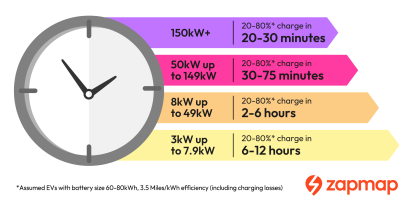
Above we’ve shared some typical electric car charging times, but as you’ve probably surmised they are fairly ‘ballpark’ figures.
Scroll on if you’ve ever wondered what factors might actually affect electric car charging times.
What factors affect electric car charging time?
Quite a few factors affect how long it takes to charge an electric vehicle. The power rating of the EV charger is just one of them.
Here we explore some of the reasons why EV charging times vary.
The maximum charging rate of your vehicle
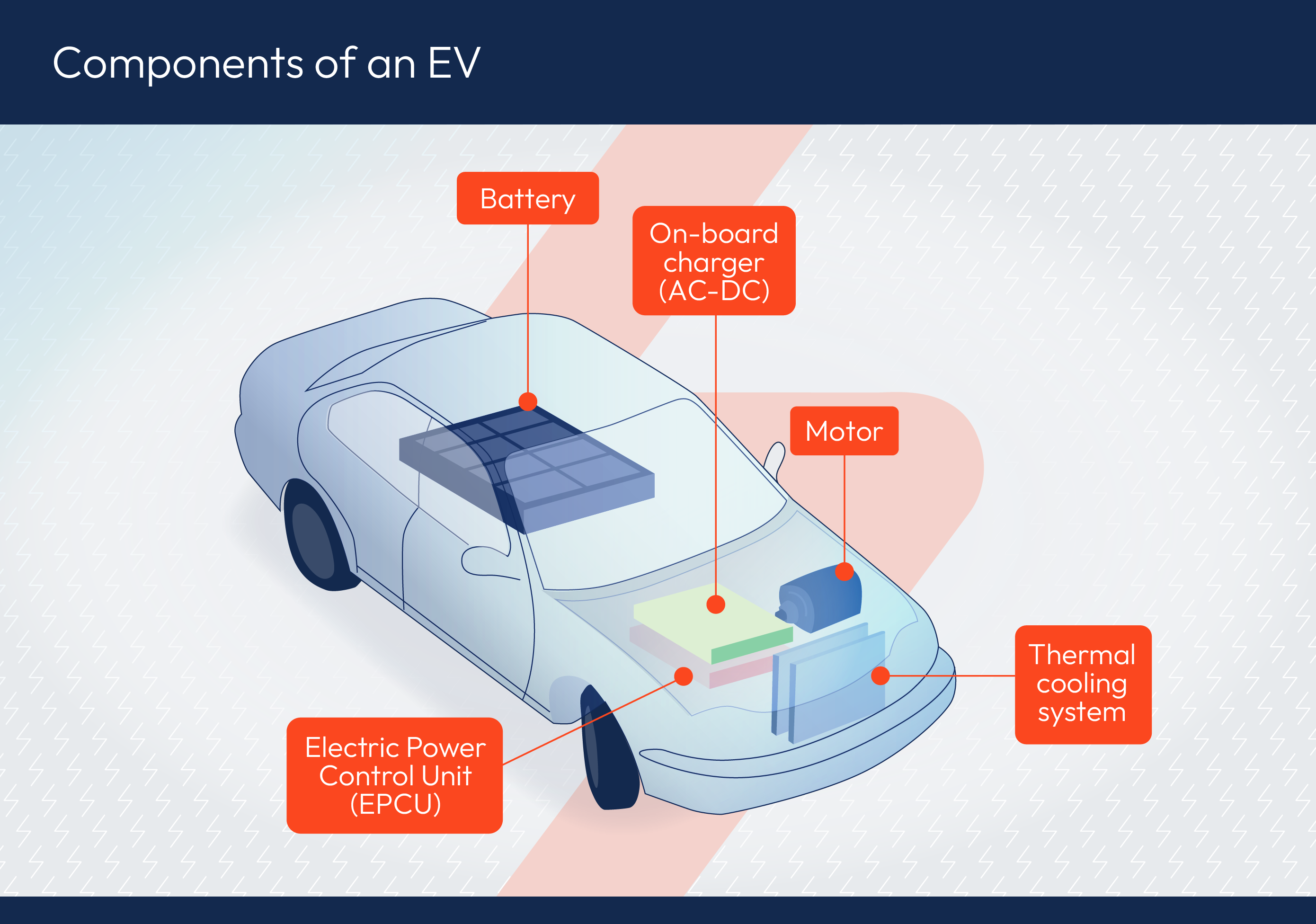
Your electric car will have an on-board charger for converting AC (alternating current) into DC (direct current). DC is what an electric car battery needs.
Your car will also have a maximum rate at which it can charge. Most modern electric cars can charge at a rate of at least 50kW, with many able to charge at a much higher rate.
However, in some cases, the maximum charging rate of your vehicle might mean that the car won’t receive the full benefit of certain charge points.
To help you get a better idea of what this means, we’ve included a couple of examples below, with charging times included.
First let’s take a look at the Kia EV6 Long Range.
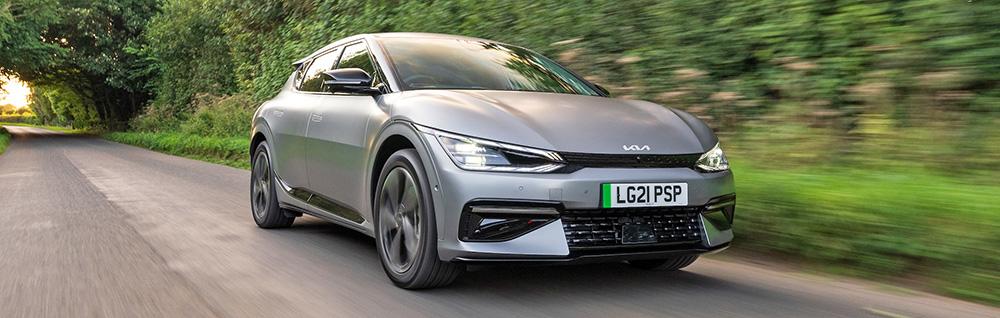
This car has a maximum charging rate of 235kW for DC charging, and a maximum charging rate of 11kW for AC charging.
When using an ultra-rapid charger, the car can take approximately 16 minutes to increase the battery level from 20% to 80% - giving approximately 25 to 200 miles of range.
However, charging times will vary significantly with lower-powered chargers. For example, if using a 50 kW DC charger, this would take considerably longer.
If you’re using a 22 kW AC charger, the charging session would take around eight hours to go from 20% to 80%. Due to the vehicle’s maximum AC charging rate of 11 kW, the same charge would also take approximately eight hours on an 11 kW charger, as the car is unable to utilize the higher capacity of the 22 kW charger.
Now let’s take a look at the Nissan LEAF.
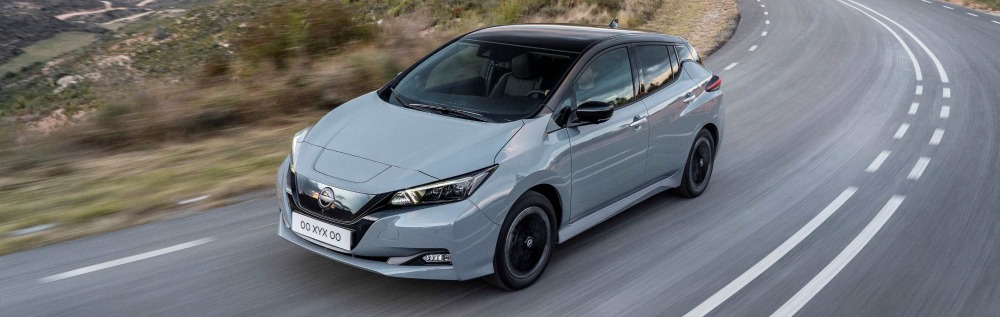
This car has a maximum charging rate of 46kW for DC charging, and a maximum charging rate of 6.6kW for AC charging.
Note that the charging speed and range will depend on the specific variant of the Nissan LEAF, as different models have different battery capacities.
When using a 50 kW DC charger, the car can take approximately 43 minutes to charge from 20% to 80% - that's approximately 14 to 116 miles of range.
If you’re using a standard 7 kW AC home charger, the charging session would take approximately seven hours to go from 0% to 100%. Because of the vehicle’s maximum AC charging rate of 6.6 kW, using a more powerful 11 kW or 22 kW AC charger would not result in faster charging times.
In short, sometimes your electric car itself could be a limiting factor when it comes to how long it takes to charge. For example, you wouldn’t see any difference in charging time if you plug a LEAF with a maximum charging rate of 46kW (DC) into a high-powered 150kW charger or into a 50kW charger.
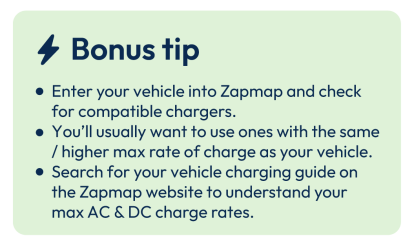
If you haven’t already, take a look at the app or manual that came with your car to find out your vehicle’s maximum charging rate. You can often find this information in the infotainment display within the settings menu.
The charging ‘curve’ of your vehicle
The maximum rate at which an electric car can charge is not the only factor affecting the time it takes to charge.
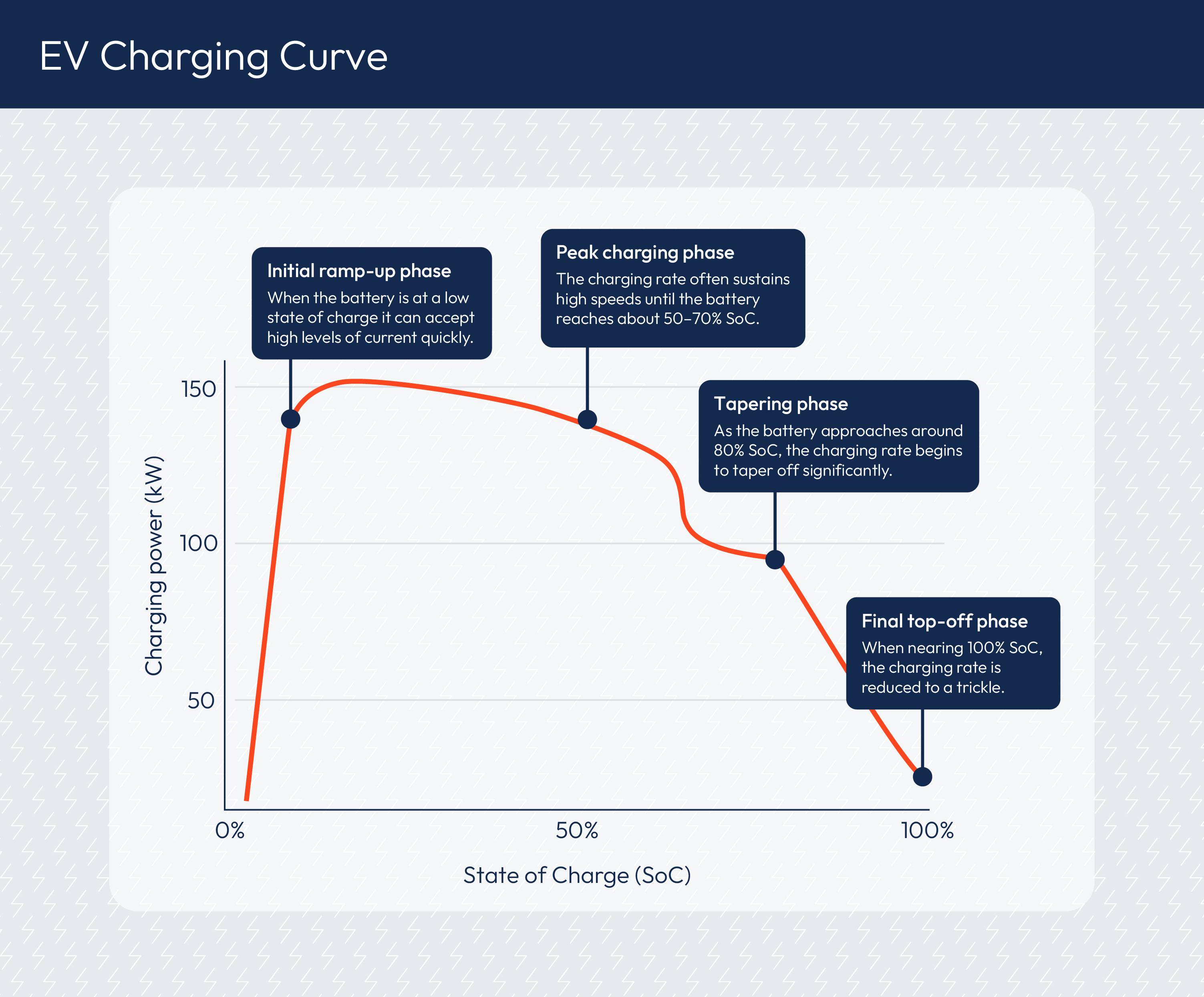
Each electric car model has its own charging ‘curve.’ This is essentially a pattern of charging that’s designed to protect the battery.
In a nutshell, your car will determine how fast it can charge based on the starting point of the battery percentage.
Crucially, the rate of charge will slow down as it approaches 100% – as well as at lower states of charge, for example when below 10%.
This pattern of charging is designed to control the temperature of the battery, such that it warms and cools slowly, preventing damage and degradation over time.
The temperature of the surrounding environment
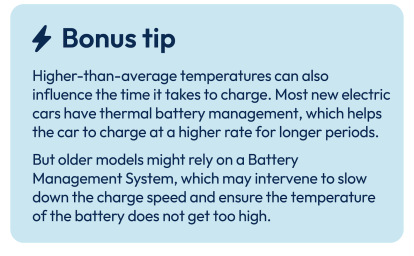
If you’ve ever noticed that on colder days your car battery seems to take longer to charge, you’re not imagining it. Temperature impacts charging rates.
The ideal temperature for an EV battery to charge is around 25 degrees Celsius. If it’s colder, it takes longer.
That’s because lower temperatures impact the internal resistance of the battery, with the chemical reactions inside the battery slowing down due to the resistance.
This not only means that the charging current is lowered, but that the effective battery capacity is lower – so you’ll likely notice a reduction in range on colder days too.
Top tips:
- Try to avoid charging your EV when the car is cold. Driving will warm the battery up, so if possible drive for a while before starting your charge.
- If you have a home charger, time the charge to end just before the start of your journey. The battery will be warmer because it’s been charging.
The power rating of an EV charger
As we saw earlier, the time it takes to charge your electric car also depends on the type of charger that you plug into.
Some chargers are AC (alternating current) and others are DC (direct current).
Public charge points can be either AC or DC, and vary in power rating from 3kW to 400kW+. These can be grouped as follows:
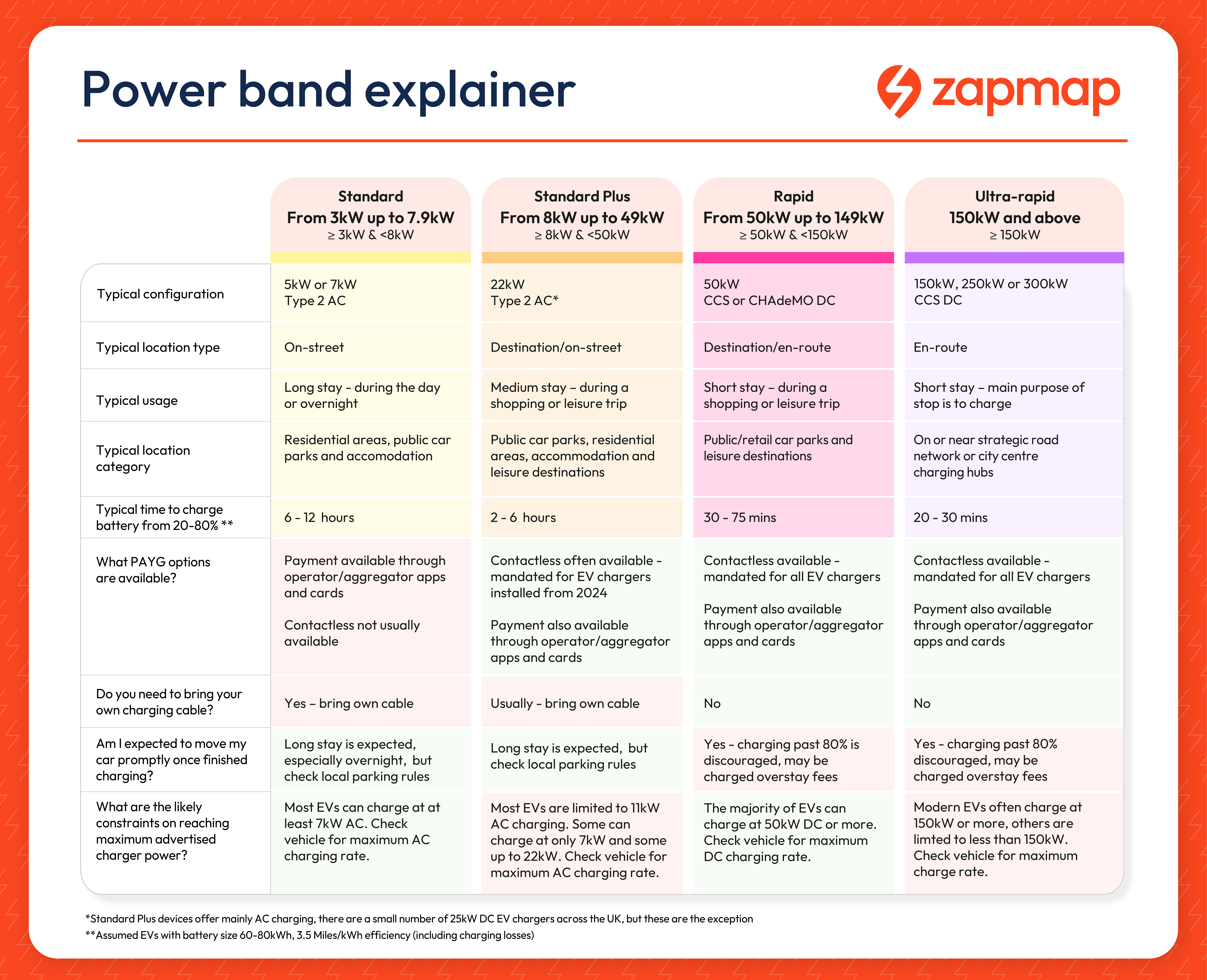
The power band of an EV charger is defined as the maximum potential power delivered by its highest power connector. An EV charger could deliver lower power than the lower limit of the power band for several reasons including but not limited to:
- the electric vehicle having maximum AC or DC charging lower than the advertised power of the EV charging
- the electric vehicle battery management system limiting power input to manage battery health
- use of "load management" reducing the power delivered when multiple EVs are charging from a single power source
- insufficient grid power available at the location
En-route charge points, such as those found at motorway service stations, generally have power ratings that range from 50kW to 350kW. Depending on the make and model of your electric car, you could charge up to 80% in as little as 20 minutes at some of the higher-powered charge points.
Destination charging can be found at locations such as hotels, shopping centres and amusement parks. They are typically AC charge points delivering charging between 7kW and 22kW. You’ll also find some quicker DC devices at locations such as supermarkets, many of which will be 50kW, though some networks have installed 25kW DC chargers with CCS or CHAdeMO connector types.
While charging speed can vary, a 7kW charger will generally charge your car from 20-80% within six to 12 hours, while a 22kW charger will do so within one to two to six hours.
The power modules in an EV charger
Before a charge even reaches your car, the power modules within a charger convert the energy from the grid into a usable format.
Chargers contain multiple power modules – for example, a 150kW charger may comprise six 25kW power modules.
As such, if your car has a maximum charging rate of 50kW, only the required number of power modules will deliver electricity, even on a higher-powered charger.
Of course, technical problems can occur that might limit the rate of charge – if one or more of the power modules is faulty, for instance.
Simultaneous charging
Sometimes, when you plug into a device with multiple connectors, you might find the charge rate is lower than expected for another reason.
If you’ve plugged into an EV charger at the same time as another driver then the charger will split the maximum power between the two cars. As a result, your car will take longer to charge than if you were charging by yourself.
In some cases, pairs of adjacent chargers are electrically linked, as well as the power modules shared between them. Some EV chargers split the power 50:50 between the two vehicles, even if this is not the most efficient approach.
Let’s say your car has a maximum charging rate of 250kW and is charging on a 150kW device. At the same time, another vehicle that can only receive a 50kW charge is also using the device to top up. Your car will receive 75kW (half of the maximum), but the other vehicle can only receive 50kW. This is a total of 125kW, so overall the charger would not be supplying its full potential (150kW).
However, charging technology is developing and many new EV charers now boast dynamic load-balancing capability to help with this issue.
Osprey Charging, for example, has load-balancing technology in its Kempower chargers, ensuring that enough power is safely drawn from the grid and then distributed based on the demands of the individual vehicles. It means the cars are charged at their maximum charging rate, and results in quicker charging times.
Your vehicle’s voltage
Electric cars are built with either a 400 volt (V) platform or 800V platform. The higher the voltage, the higher the capacity for passing electricity around a system.
Most current electric cars – such as the Tesla Model 3 – use a 400V system, which means the maximum ‘advertised’ charge rate on high-power chargers above 150kW is not achievable for these vehicles.
Some vehicles, however – like the Porsche Taycan, the Hyundai Ioniq 5 and Ioniq 6, as well as the Kia EV6 and EV9 – have 800V platforms, and can support maximum charging rates of up to 350kW.
There’s no need to worry if your electric car is built on a 400V platform though. 400V cars typically support charging speeds up to around 150kW, so you’ll be able to make full use of many ultra-rapid devices across the UK.
Plus, you’re still able to use EV chargers with power ratings between 150kW and 350kW, just expect a lower charging rate than the maximum advertised.
We hope you've found this guide useful. If you haven't already, we'd recommend downloading the Zapmap app, which will enable you to explore the EV charging infrastructure in your area at your leisure. It's a great place to get started, and there are loads of helpful hints and tricks in the app from other electric car drivers. Happy charging!